Work
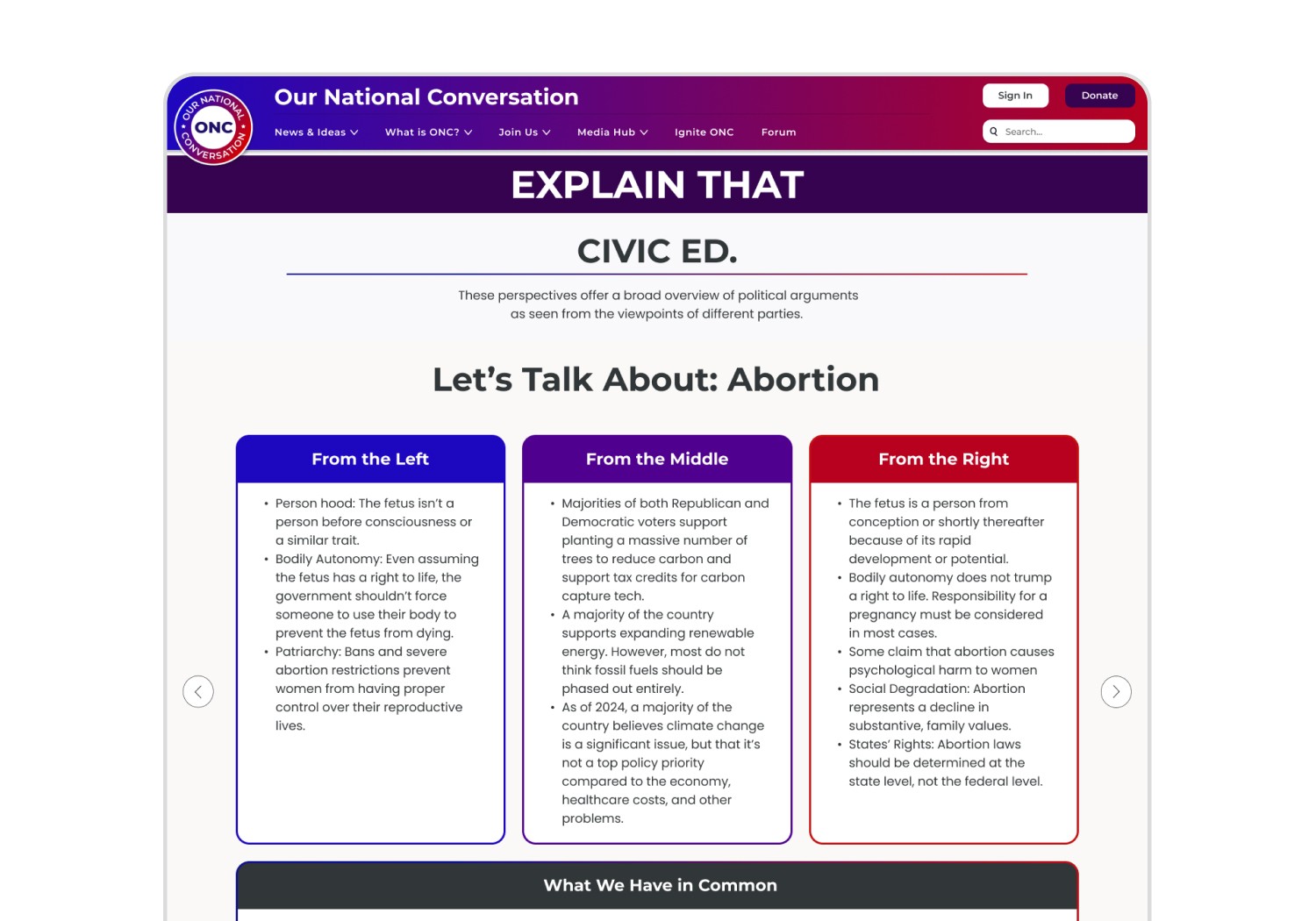
My Role
UI/UX Design — Visual Design, Prototyping
Team
UI/UX Design Interns (4)
UI/UX Design Leads (2)
Timeline
3 months
TL;DR
As a UI/UX Design Intern, I led a scoped set of structural improvements to Our National Conversation’s “Explain That” civic education hub. By restructuring information architecture, clarifying bipartisan content modules, reorganizing dense visual sections, and introducing scalable monetization placement, I contributed to a broader redesign effort that increased overall user satisfaction by 30% and improved task confidence across the site.
Context + Problem
Setting the Scene
Context
Our National Conversation (ONC) is a youth-focused civic platform publishing bipartisan educational content aimed at reducing partisanship and promoting informed dialogue.
The “Explain That” page functioned as a high-traffic topic hub combining:
Left / Middle / Right political perspectives
Video explainers
Infographics
Social media embeds
Despite strong educational intent, the page operated more like a content feed than a structured learning experience. Dense layout, weak hierarchy, and inconsistent grouping made it difficult for users to understand the platform’s mission or confidently navigate content.
My Role & Scope
UI/UX Design Intern (3 months)
6-person team
Within the broader website redesign, I oversaw structural improvements inside the Explain That hub, including:
Information architecture restructuring within the page
Redesign of bipartisan perspective modules
Reorganization of infographic layout and grouping
Replacement of disruptive social embeds with structured modules
Introduction of scalable monetization placement
Contribution to shared component consistency across 15+ related pages
Strategic direction was collaborative; execution and structural decisions within this section were my responsibility.
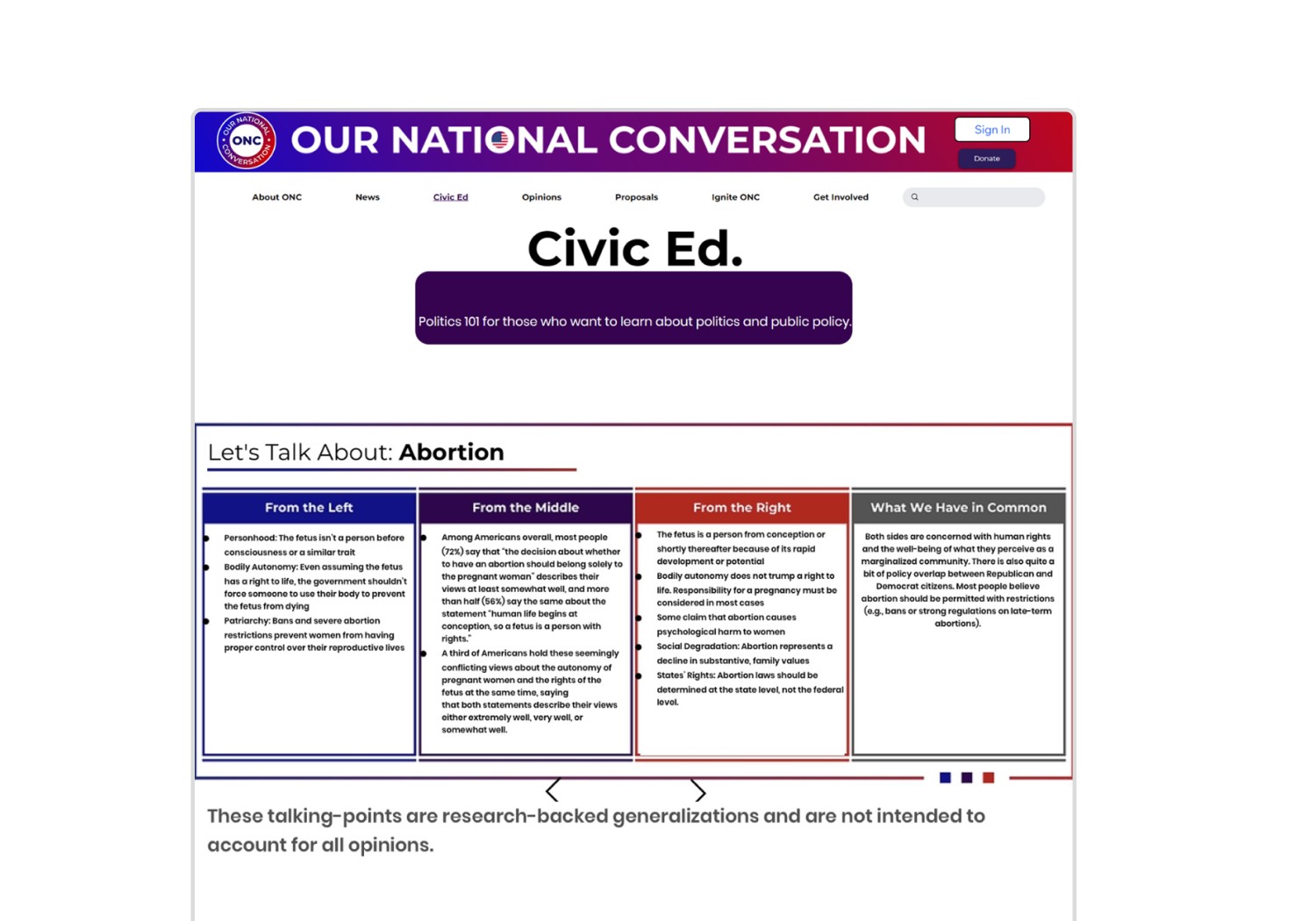
Previous webpage design
The Problem
Usability research conducted by the team revealed:
80% of users experienced navigation confusion
60% struggled to clearly articulate ONC’s mission
Content categories blurred together
Instagram embeds disrupted reading flow
For a politically sensitive, mission-driven platform, structural clarity directly impacted trust, engagement, and user confidence.
Key Constraints
I navigated several constraints:
Leadership initially wanted to preserve Instagram embeds for brand presence
Ads needed to integrate without compromising credibility
Timeline limited large-scale experimentation
Usability validation sample was small (n=5)
Design decisions required balancing user clarity, stakeholder priorities, and platform sustainability.
The Process
What I Changed
Structured the Page Around Clear Learning Modules
The previous layout mixed Civic Ed messaging with text-dense blocks.
I restructured the page into clearly defined Left / Middle / Right modules and introduced a “What We Have in Common” section to reinforce neutrality. Visual grouping and hierarchy were refined to reduce density and clarify progression through the topic.
This shifted the page from a content feed to a structured learning flow.
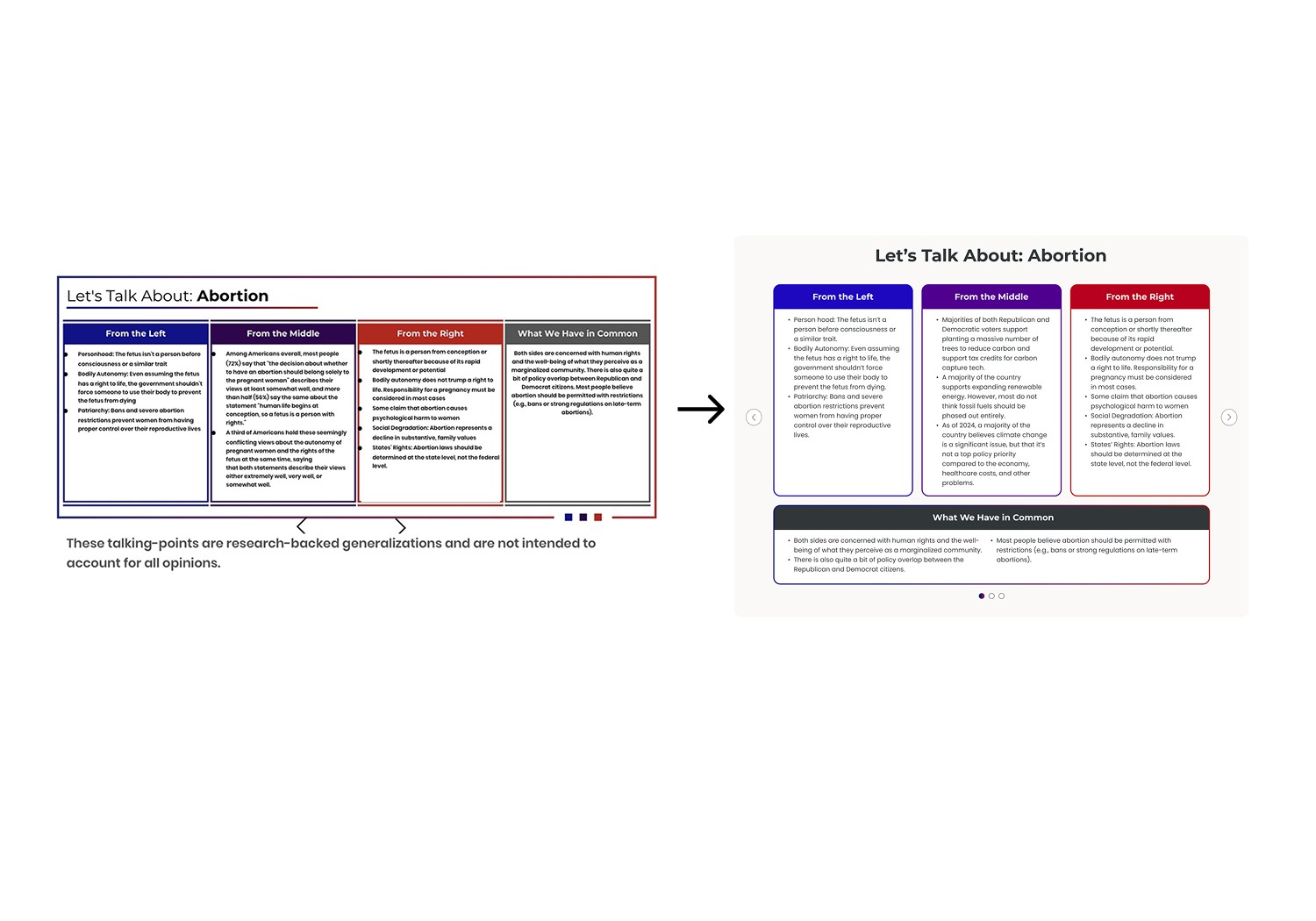
Before and after redesign of Civic Ed.
Reduced Cognitive Load Across Visual Content
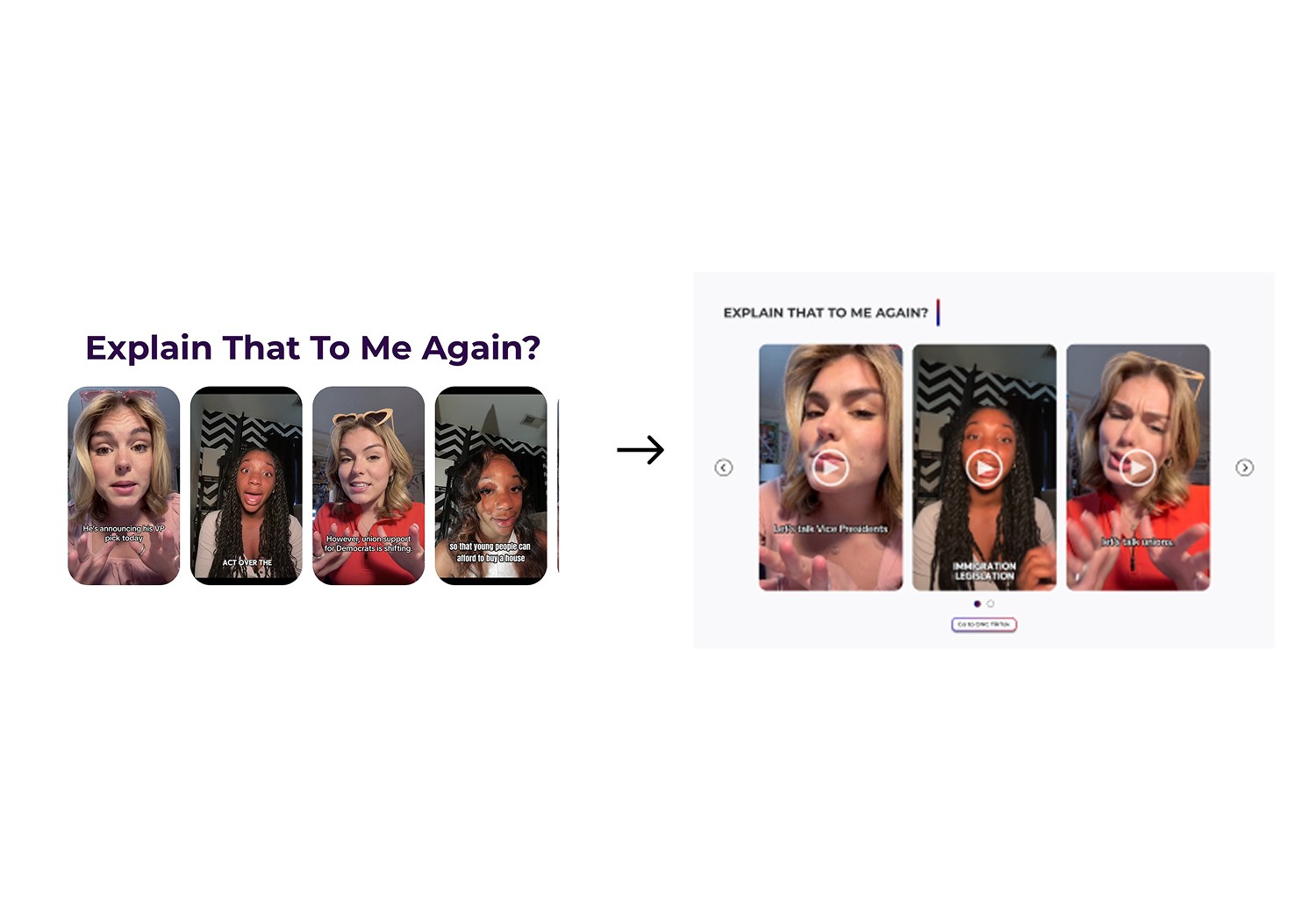
Before and after redesign of "Explain That To Me Again?"
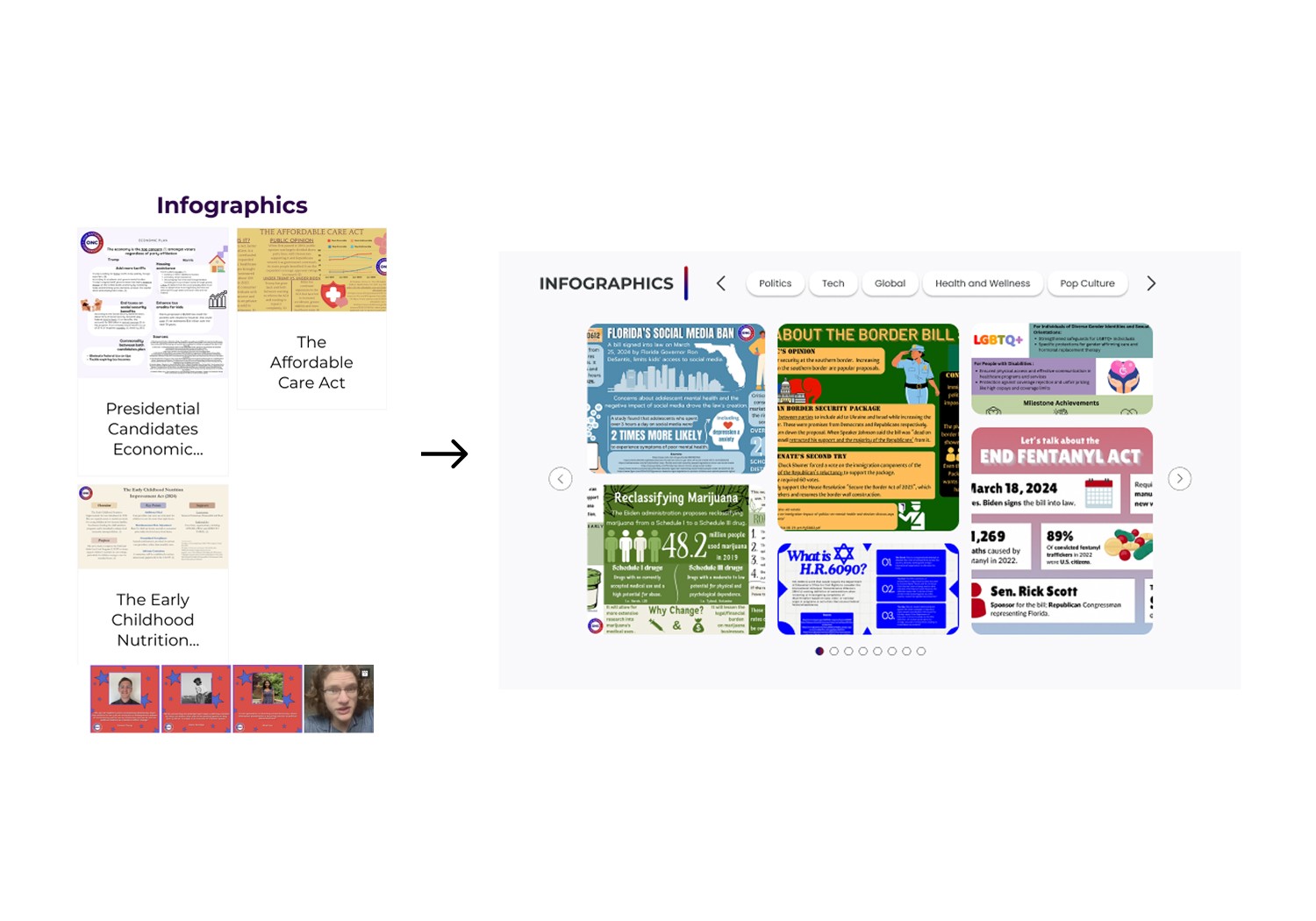
Before and after redesign of Inforaphics
Introduced Scalable Monetization Placement
While platform funding primarily came from grants, the product lacked intentional monetization infrastructure.
I integrated ad placement at a natural content break, ensuring:
No interruption of bipartisan comparison sections
Clear separation between educational content and ads
Preservation of platform neutrality
This created a sustainable monetization foundation without undermining trust.
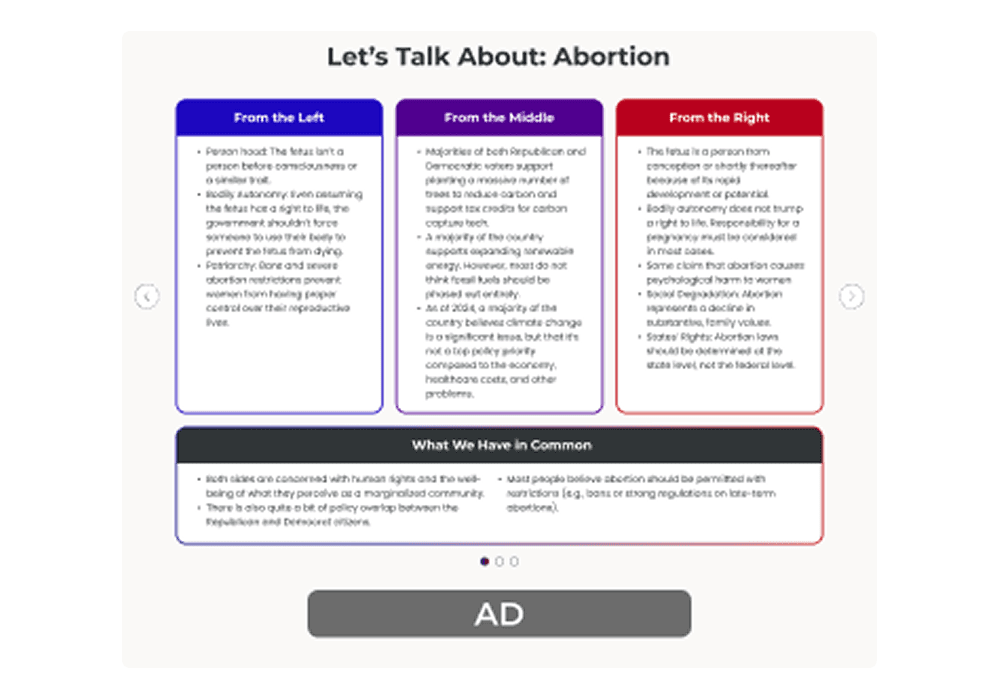
Ad placement
Outcome
Seeing it all come together
Measured Impact (Broader Site Redesign)
Following the full-site redesign effort:
5/5 usability participants understood ONC’s mission
4/5 participants confidently completed assigned tasks
Overall user satisfaction increased by 30%
While these results reflect the broader redesign initiative, the Explain That hub improvements contributed to clearer navigation and content comprehension across the experience.
Scalable Contribution
Beyond the page-level changes, I helped:
Contribute to shared UI components
Apply consistent layout standards across 15+ related pages
Improve accessibility contrast and hierarchy clarity
This reduced visual fragmentation and improved cohesion across the platform.
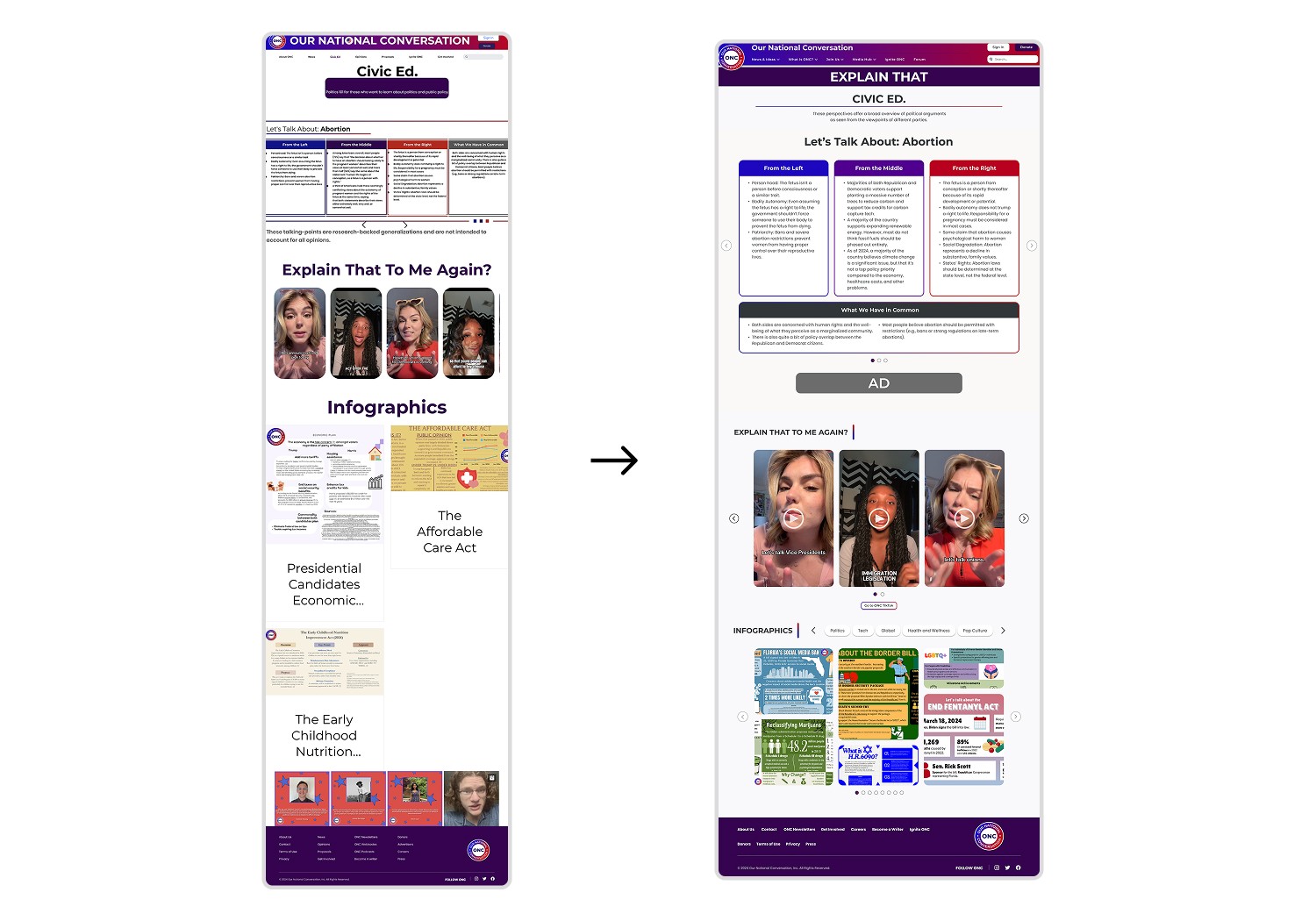
Before versus after redesign
Conclusion
Key Learnings
Key Learnings
Structure Builds Trust
In politically sensitive environments, hierarchy directly influences credibility and user confidence.
Removing Features Can Improve Engagement
Preserving every content element increases noise. Strategic subtraction improved clarity.
Monetization Requires Restraint
Revenue infrastructure must respect user intent, especially in educational contexts.